In an era where energy independence is becoming increasingly vital, understanding the technology behind power systems is essential. The inquiry "what is the difference between off grid and hybrid inverters" is common among homeowners and professionals alike. According to a report by the International Renewable Energy Agency (IRENA), global renewable energy capacity reached 2,799 GW in 2020, with solar and wind leading the charge. This surge reflects a shift toward decentralized energy solutions.
Off-grid inverters operate independently of the grid, suitable for remote locations. They rely solely on renewable sources, such as solar panels. In contrast, hybrid inverters combine both grid connection and battery storage. This versatility allows for energy use optimization and grid dependence reduction. Research from the U.S. Department of Energy indicates that hybrid systems can enhance reliability by 30% during outages compared to off-grid ones.
Despite their advantages, choosing the right system poses challenges. Off-grid systems can lack backup during extended cloudy weather, while hybrid systems may carry higher initial costs. It's crucial for consumers to weigh these pros and cons, making informed decisions based on concrete data. Understanding these distinctions is key to selecting the best inverter for individual energy needs.
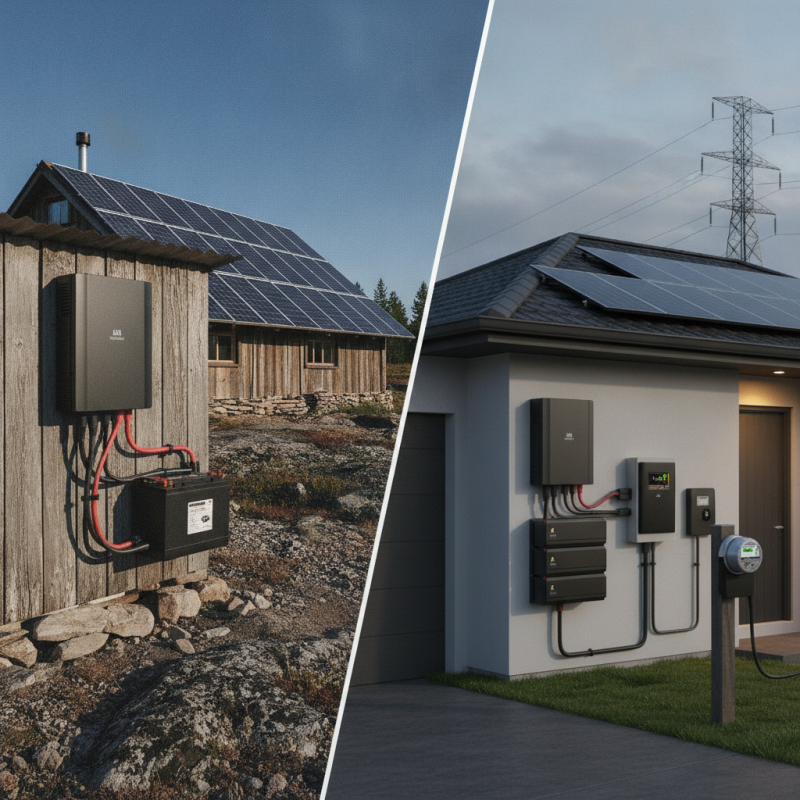
Overview of Off Grid and Hybrid Inverters
Off-grid and hybrid inverters play essential roles in today's energy landscape.
Off-grid inverters operate independently from the utility grid.
They convert DC power from batteries or solar panels into AC power for home use. This is crucial for remote areas where grid access is limited.
Users can experience energy independence, but they must manage energy storage carefully to avoid outages.
Hybrid inverters combine the functions of off-grid and grid-connected systems. They can draw energy from either the grid or battery storage.
This flexibility allows homeowners to utilize solar power during the day and switch to grid power at night.
However, the complexity of these systems can be daunting. Installation and maintenance require a certain level of expertise.
Users may find themselves constantly evaluating their energy consumption patterns to maximize efficiency.
Understanding these types of inverters helps in making informed decisions.
Every setup has its pros and cons. Off-grid systems offer autonomy but require careful planning.
Hybrid systems provide versatility but can be more complicated. Ultimately, it's essential to weigh these factors based on your unique energy needs and location.
Key Functionality of Off Grid Inverters
Off grid inverters play a crucial role in renewable energy systems. They allow users to harness solar or wind power without relying on the traditional power grid. These inverters convert direct current (DC) from solar panels into alternating current (AC) for home use. They can also provide energy storage options, ensuring power availability during nighttime or cloudy weather.
One key functionality of off grid inverters is their ability to manage battery systems efficiently. They charge batteries when excess energy is available and draw from them when needed. This process ensures optimal use of energy and prolongs battery lifespan. However, users must be mindful of battery capacity and charging cycles. Mismanagement can lead to reduced efficiency and increased costs.
Moreover, off grid inverters often include safety features to protect against overloading and short circuits. While these functions enhance reliability, they require proper installation and regular maintenance. A lack of understanding can lead to mistakes. Some users may overlook the importance of regular checks, resulting in performance issues. Overall, off grid inverters are powerful tools for energy independence, but they necessitate careful consideration and management.
Key Functionality of Hybrid Inverters
Hybrid inverters have gained attention for their unique functionalities. They combine the features of both grid-tied and off-grid systems. This allows them to harness renewable energy effectively while providing backup power.
A key functionality of hybrid inverters is their ability to manage energy sources. They can switch between solar power, battery storage, and grid electricity seamlessly. This means you have more control over your energy consumption and can prioritize renewable resources.
Tips: Regularly check the battery levels. This practice ensures optimal performance. Understanding energy management is crucial. Knowing your energy consumption patterns helps.
Another notable aspect is their capability for real-time monitoring. Users can track energy production and consumption through an app or a web interface. This feature promotes transparency and empowers users to make informed decisions.
Remember, hybrid inverters may require more upfront investment than traditional models. Yet, their long-term benefits often outweigh these initial costs. Carefully consider your energy needs before making a decision.
Top 5 Differences Between Off Grid and Hybrid Inverters
Major Differences in Energy Sources Utilized
When examining the energy sources utilized by off-grid and hybrid inverters, key distinctions arise. Off-grid systems primarily rely on renewable energy sources. Solar panels are their mainstay. Wind turbines may also serve as a supplementary option. This setup offers independence from the grid. However, energy storage is vital. This often results in higher battery requirements. Costs can escalate. Balancing energy output and demand must be meticulously managed.
In contrast, hybrid inverters combine both renewable sources with traditional power grids. They seamlessly switch between the grid and stored energy. This flexibility can enhance reliability. If solar or wind energy is insufficient, the grid fills the void. Yet, hybrid systems necessitate careful installation and monitoring. Managing multiple energy inputs can become complex. Users might struggle to optimize their energy mixes.
Both systems have their merits and drawbacks. Off-grid systems promote self-sufficiency. However, they demand vigilant energy management and potential high costs. Hybrid inverters provide a safety net but can be intricate. Each choice reflects individual energy needs and lifestyles. Understanding these differences helps consumers make informed decisions, even if it feels overwhelming at times.
Comparative Efficiency and Performance Metrics
When comparing off-grid and hybrid inverters, efficiency and performance are crucial metrics. Off-grid inverters operate independently, providing power solely from renewable sources. This is ideal for remote areas. They can struggle during cloudy days or low sun exposure. Here, the performance might dip significantly.
Hybrid inverters, on the other hand, combine renewable sources with the grid. They offer more consistent power availability. During low production times, they can draw energy directly from the grid. This flexibility enhances overall efficiency. Additionally, these inverters often allow for energy storage, providing backup during power outages.
Tip: Regularly monitor your system's performance. Track energy production and consumption. This helps identify any inefficiencies over time.
Tip: Consider your energy needs carefully. An off-grid system may be ideal for some. Yet, others might find hybrid systems more dependable. Reflect on your lifestyle when making a choice.
FAQS
: Off grid inverters convert DC from renewable sources to AC for home use.
They charge batteries with excess energy and draw from them when needed.
Users need to manage capacity and charging cycles to avoid inefficiency.
They include features to protect against overloading and short circuits.
Lack of maintenance can lead to performance issues and decreased reliability.
They may struggle in low sunlight, affecting performance during cloudy days.
They provide consistent power by combining renewable sources with grid access.
Regularly track energy production and usage to spot inefficiencies.
Consider your energy needs and lifestyle for the best fit.
Yes, mistakes in installation can lead to significant performance issues.
Conclusion
Off grid and hybrid inverters serve distinct purposes in solar power systems, and understanding what is the difference between off grid and hybrid inverters is essential for making informed choices. Off grid inverters operate independently, relying solely on battery storage for energy, making them ideal for remote locations without access to the grid. They manage solar energy production and battery charging but do not connect to the public electricity grid.
In contrast, hybrid inverters connect to both battery storage and the grid, allowing for more flexibility in energy use. They can utilize grid energy when necessary and enable excess solar energy to be sent back to the grid, enhancing overall system efficiency. The differences in energy sources utilized and the varying performance metrics highlight the importance of choosing the right inverter based on individual energy needs and circumstances.

 Luzz Solar