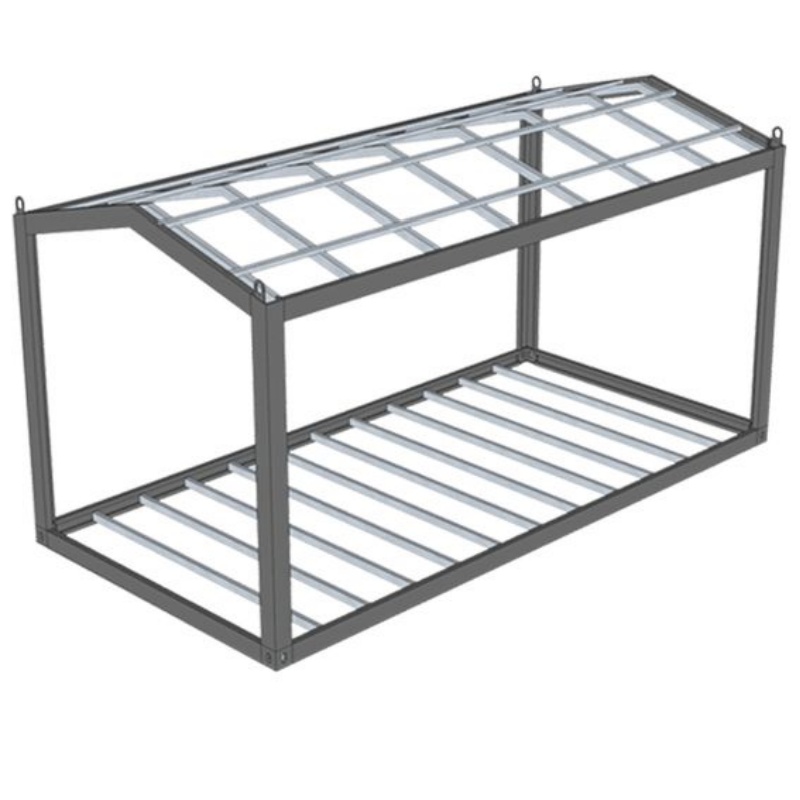
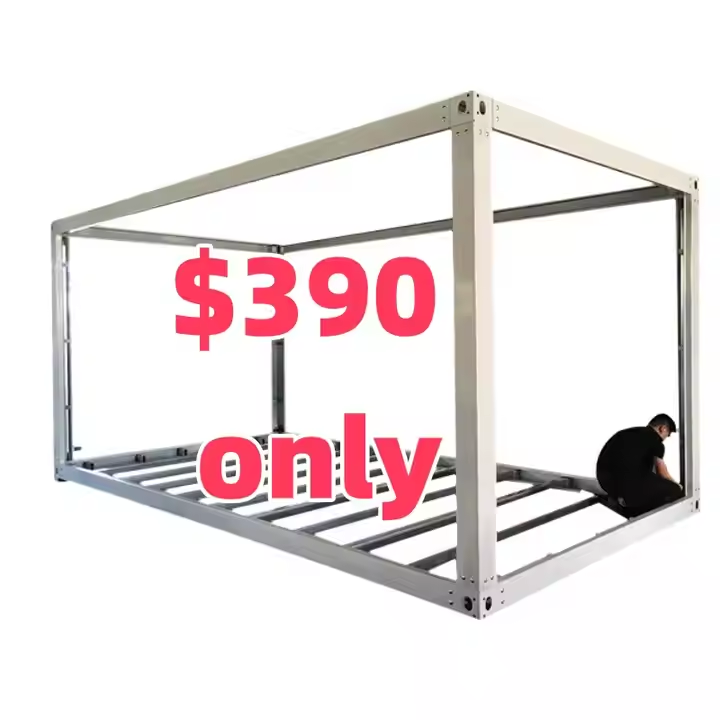
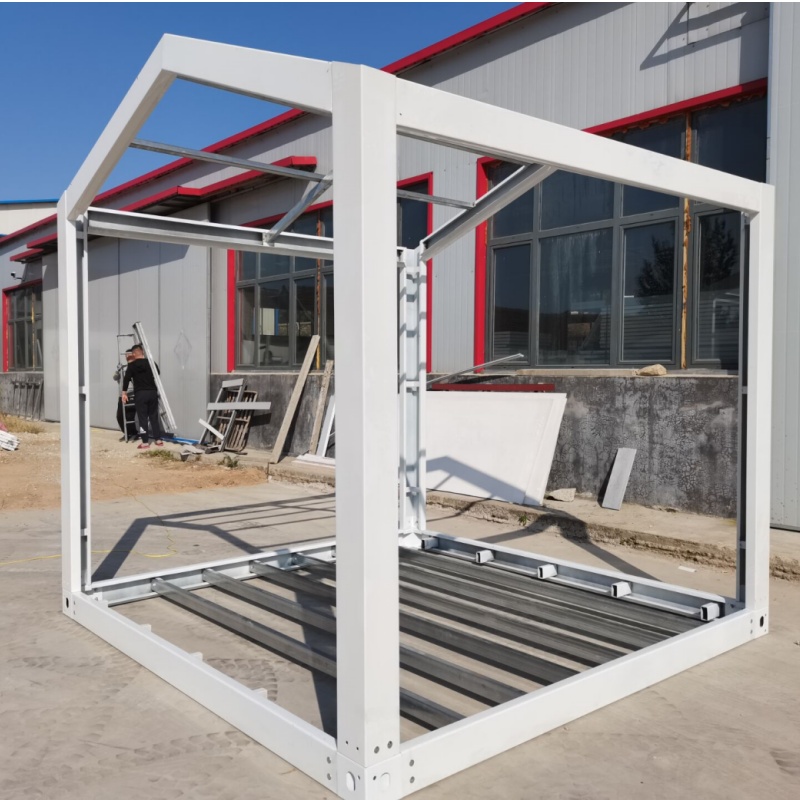
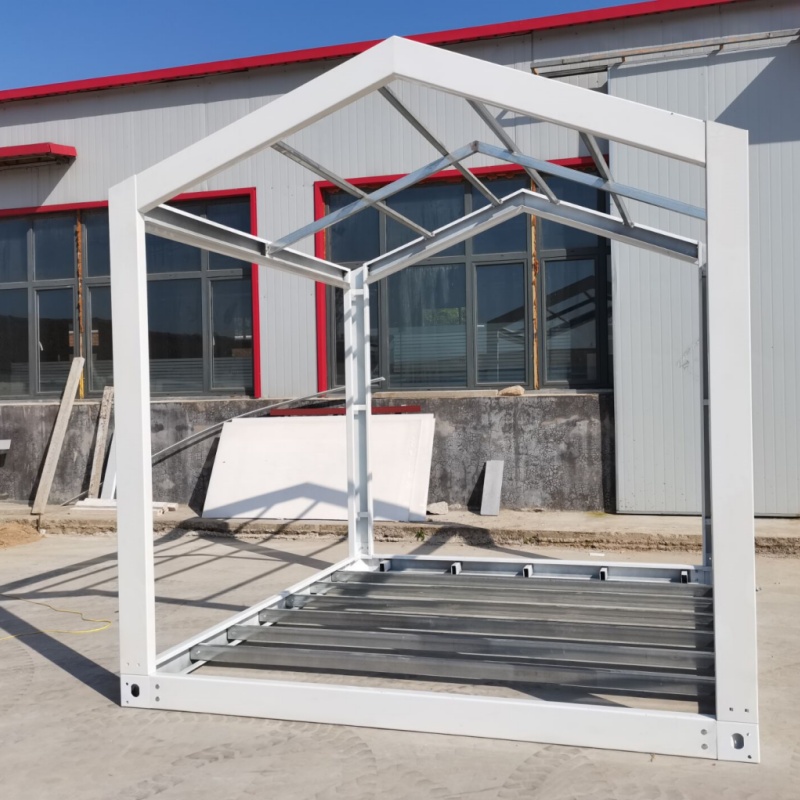
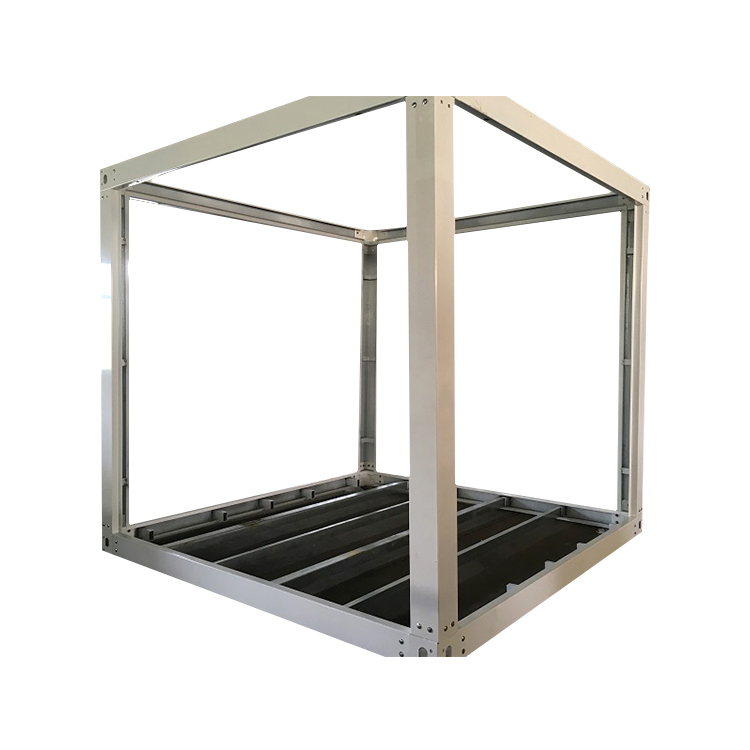
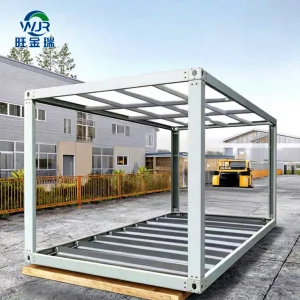
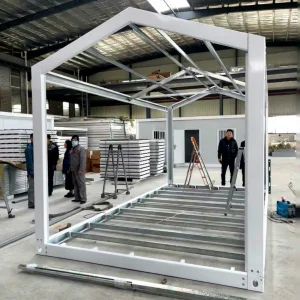
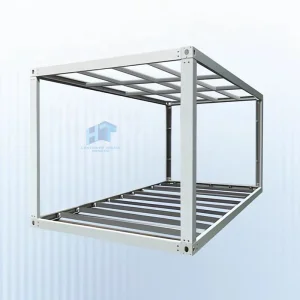
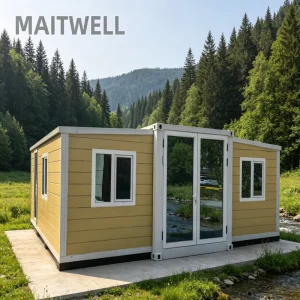
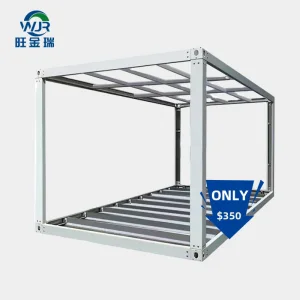
prefabricated 10ft 20ft 30ft 40ft mobile steel Modular Portable Tiny Stackable Prefab shipping cargo Container home house Frame

Product Description

Container Engineering Report & Technical Conditions

01General Technical Conditions

  • The structure is engineered to withstand up to magnitude 8 earthquakes.
  • Designed with seismic grouping Class I, site characteristic cycle of 0.45s, Class III construction site, and a steel structure damping ratio of 0.05.
  • The maximum horizontal earthquake influence coefficient (αmax) is 0.04, calculated based on a 5-year cycle.
  • Structural safety level is Grade 2, with an importance coefficient of 1.0.
  • Corner fitting elevation is set at plus/minus zero.

02Materials & Specifications

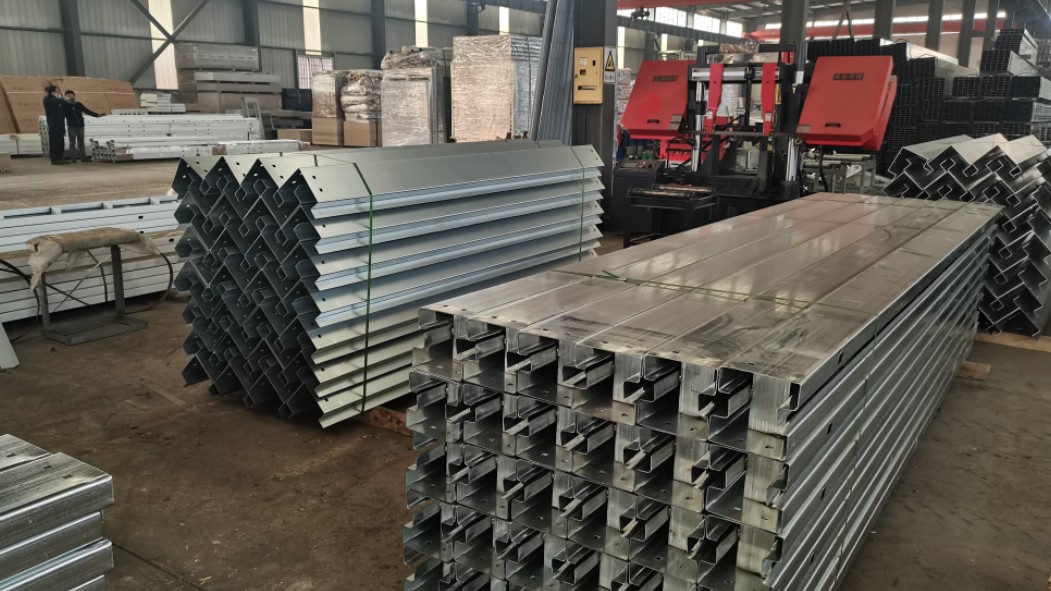
Standard components including steel beams, columns, and purlins are constructed using high-quality Q235B cold-bending galvanized light steel.

  • Steel Strength: f = 215 N/mm²

Wind Loading

Based on a 15-year design durability lifespan, the basic wind pressure rating is W0 = 0.3 KN/m².
03Floor & Roof Loading Combinations

Bottom Flooring

  • Structure Weight: 0.4 kN/m²
  • Dead Load Value: 0.4 kN/m²
  • Live Load Value: 3.0 kN/m²

Roof Board

  • Structure Weight: 0.3 kN/m²
  • Dead Load Value: 0.3 kN/m²
  • Live Load Value: 0.5 kN/m²

Structure Specifications

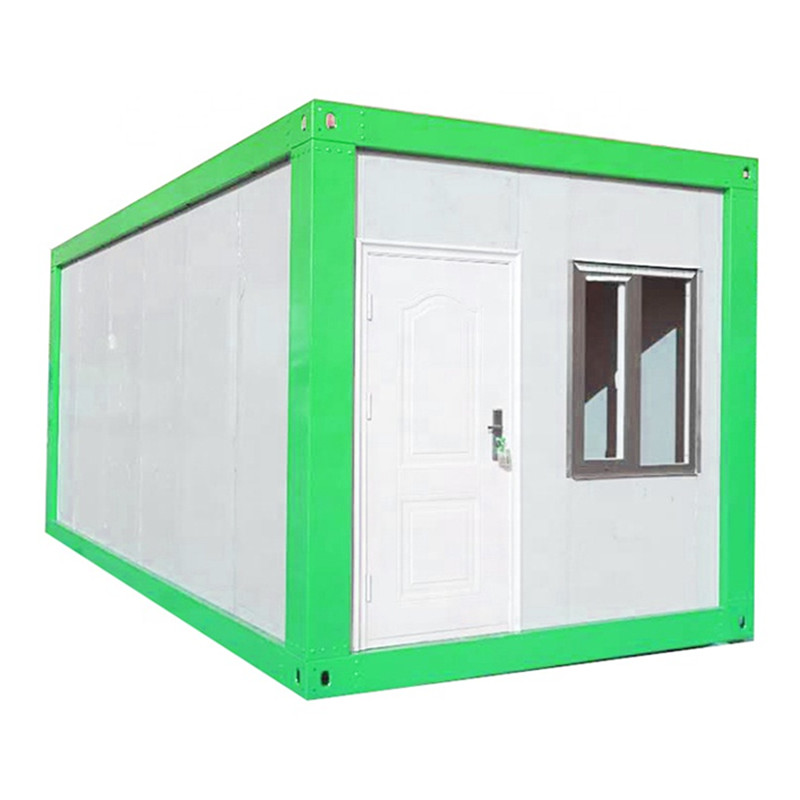
Container House Structure Diagram
Component Standard Specification
beam 2.2mm thickness galvanized frame + powder coating
column 2.3mm thickness galvanized frame + powder coating
wall 50mm thickness EPS sandwich panel
roof Steel sheet + 75mm thickness glass wool insulation + steel ceiling
floor MGO board
door Steel security door
window PVC sliding window

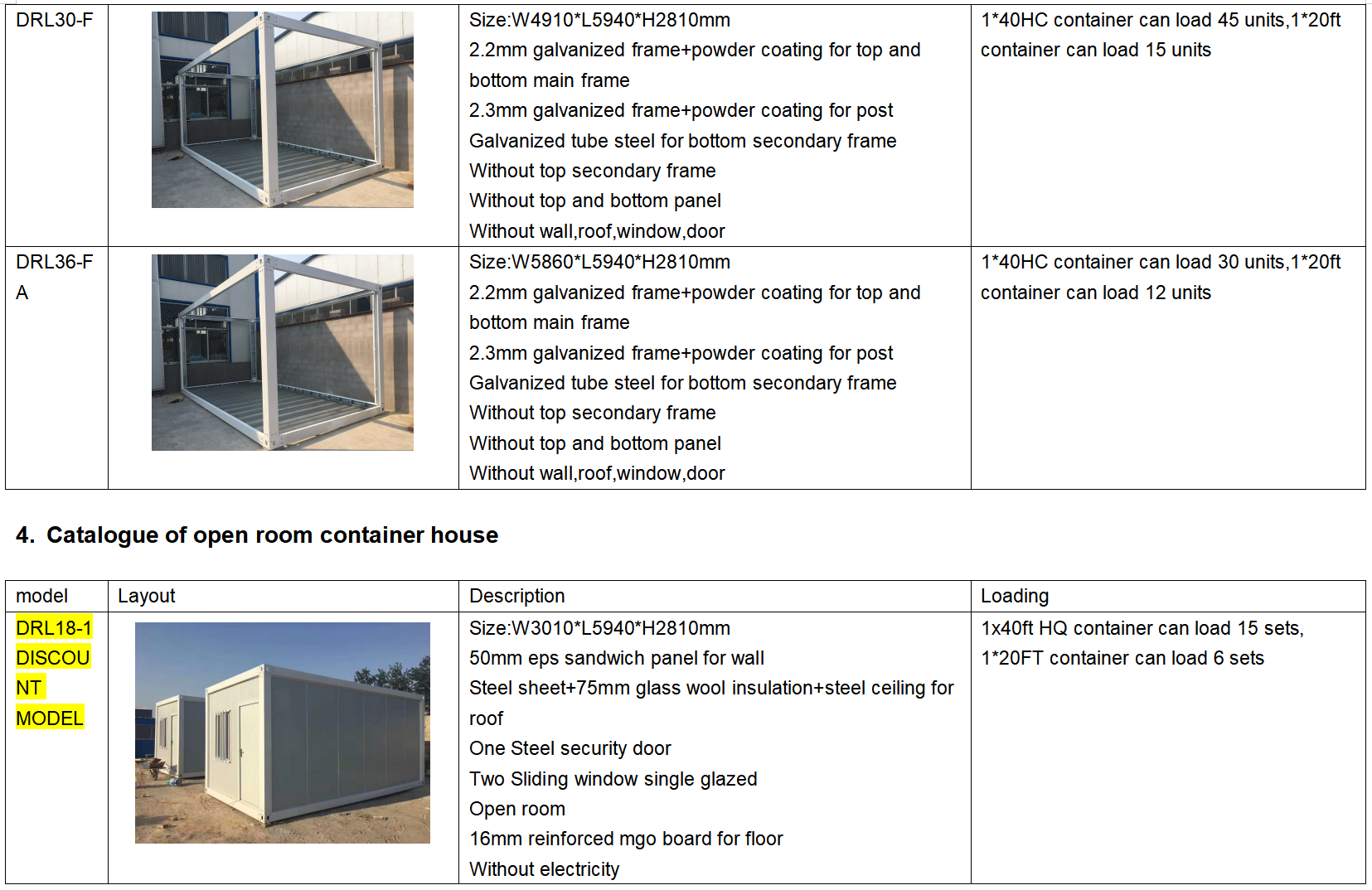
Main Frame System

Structure Frame Overview
Standard Steel Frame Layout

Key Advantages of Our Container Houses

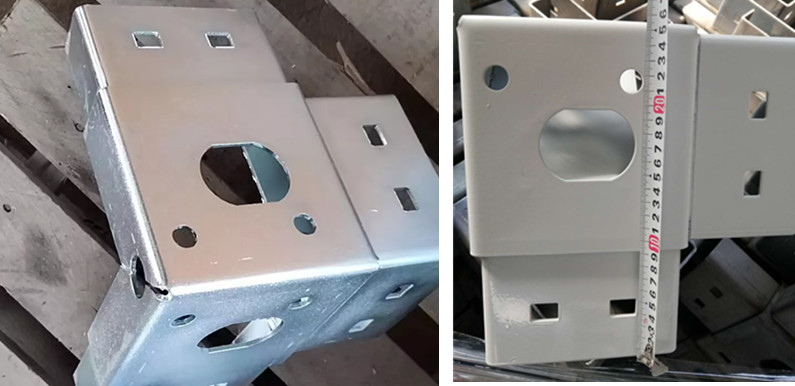
1. Container Corner Protection

Typical container corners are welded by steel plates. Due to multiple welding points, standard powder coating often fails to cover every spot completely, leading to rust within six months.
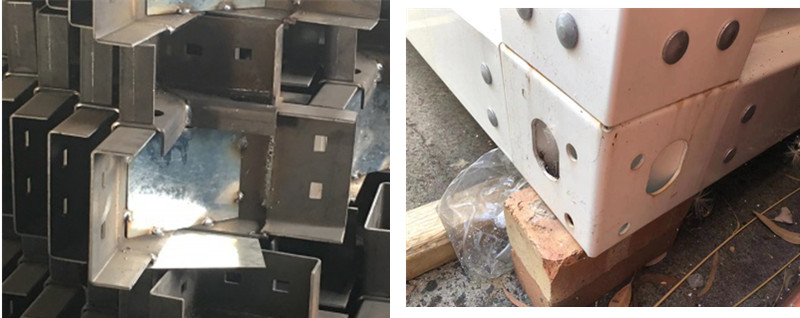
Standard welded corner showing vulnerability to rust
Standard Welded Corner (Susceptible to Rust)
Electroplated and powder coated corner for anti-rust protection
Our Corner: First Electroplated, then Powder Coated for Superior Rust Resistance

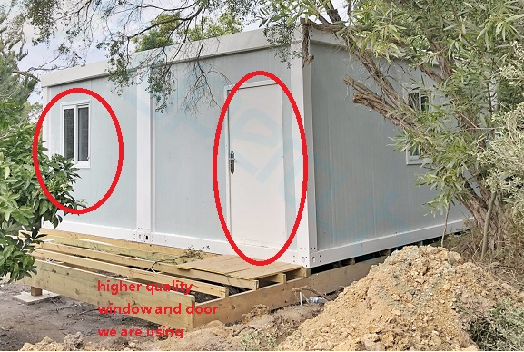
2. High-Quality Windows & Doors

We implement durable windows and doors built to withstand heavy use, strictly avoiding the fragile, budget options commonly found in the market.
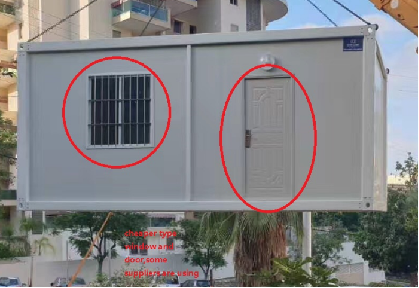
Fragile standard windows used by other suppliers
Other Suppliers: Standard Fragile Profile
Heavy duty reinforced windows and doors used in our build
Our Standard: Heavy-Duty Reinforced System
  • Advanced Cement-Infused MGO Board: Unlike common MGO boards that lack strength and waterproof performance, our subflooring material is infused with cement, delivering robust structural integrity and water resistance.
  • Premium Sandwich Panels: Our panels feature a true 0.4mm outer skin. Many alternative products use thin 0.3mm double skins (frequently measuring just 0.25mm in reality), which can compromise security.
  • Precision Bending Columns: Built using specialized bending machines, our columns feature exact bolt-hole placement for easy installation. This eliminates alignment issues typical of standard cold-formed manufacturing.
  • Reinforced 14-Piece Floor Joist System: Our base frame utilizes 14 secondary beams spaced approximately 380mm apart to eliminate floor bounce. Standard alternatives often reduce this to 9 beams (570mm spacing), resulting in noticeable vibration.
  • Robust 2.3mm Frame Thickness: Our frame measures 2.3mm before powder coating. This ensures structural independence, unlike thinner 1.8mm frames that rely heavily on additional support posts to prevent collapse.

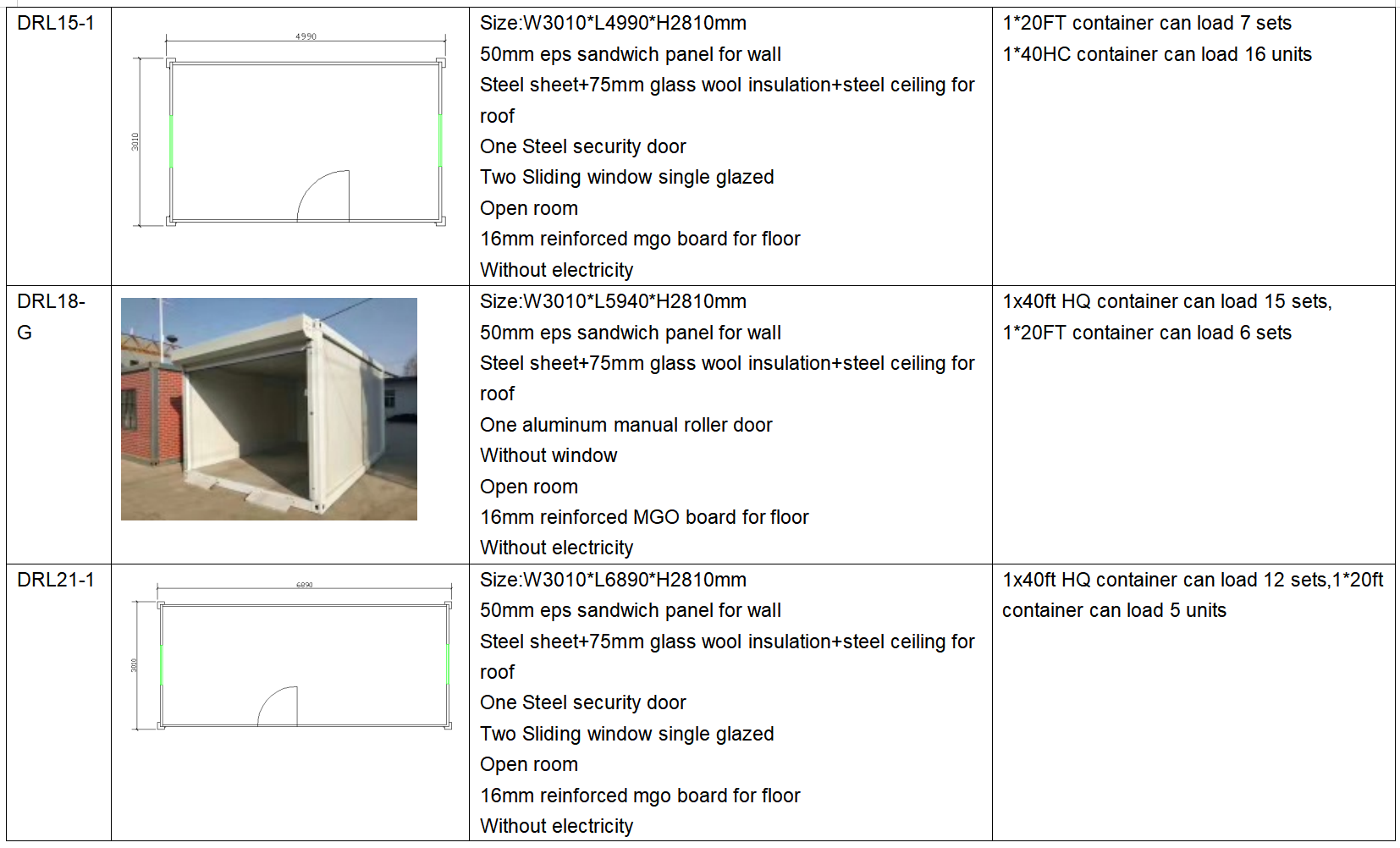
Available Models & Layout Configurations

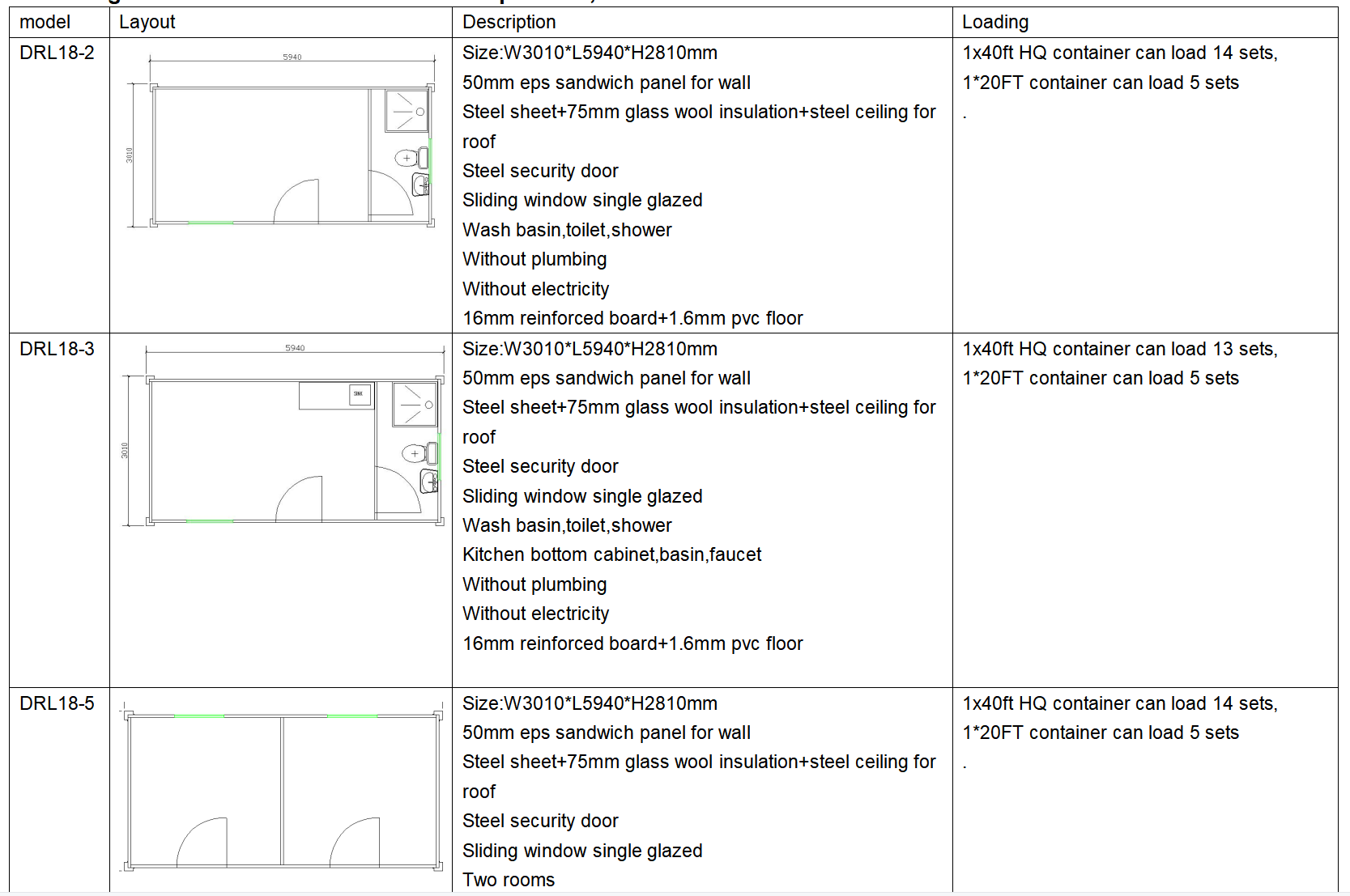
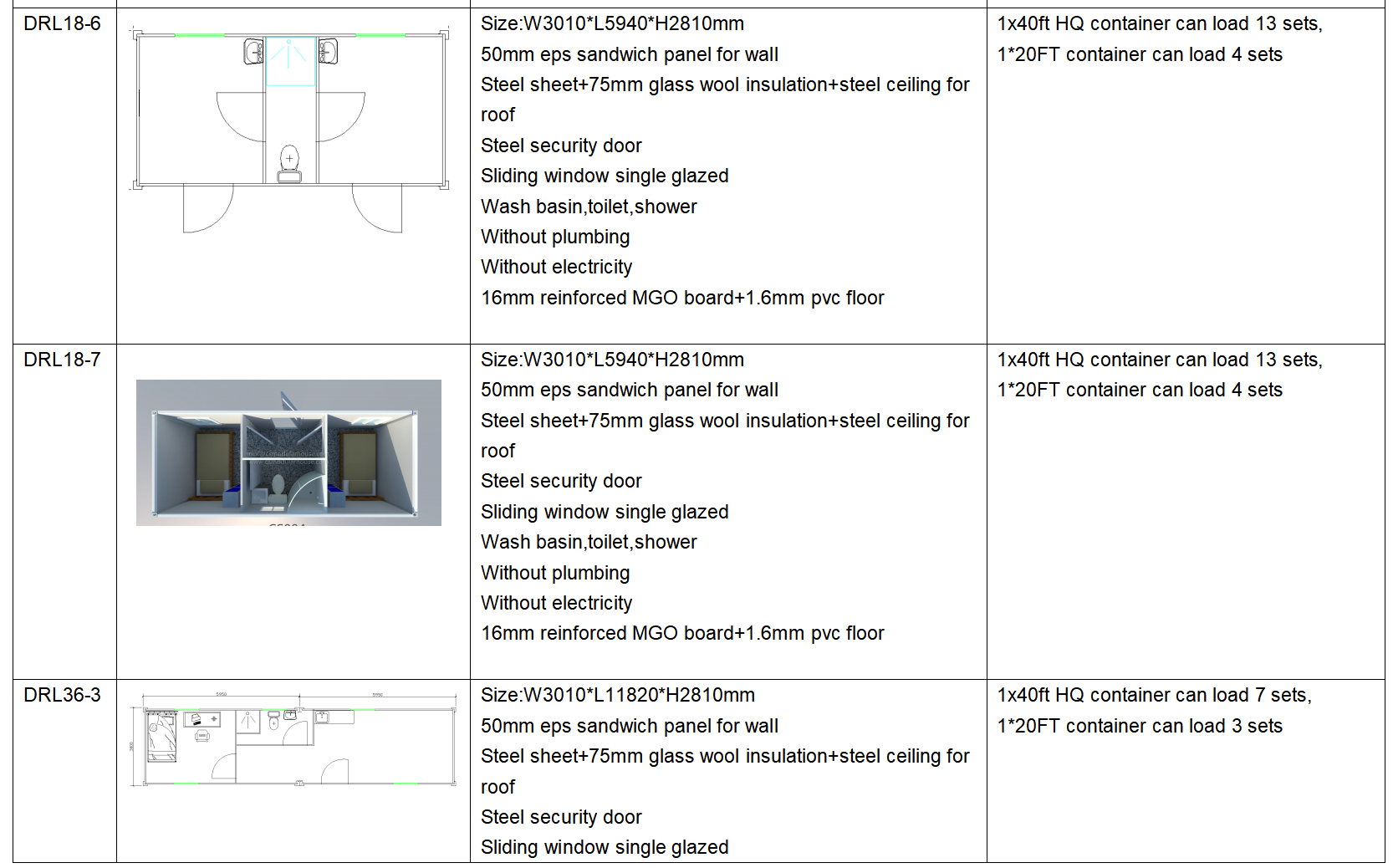
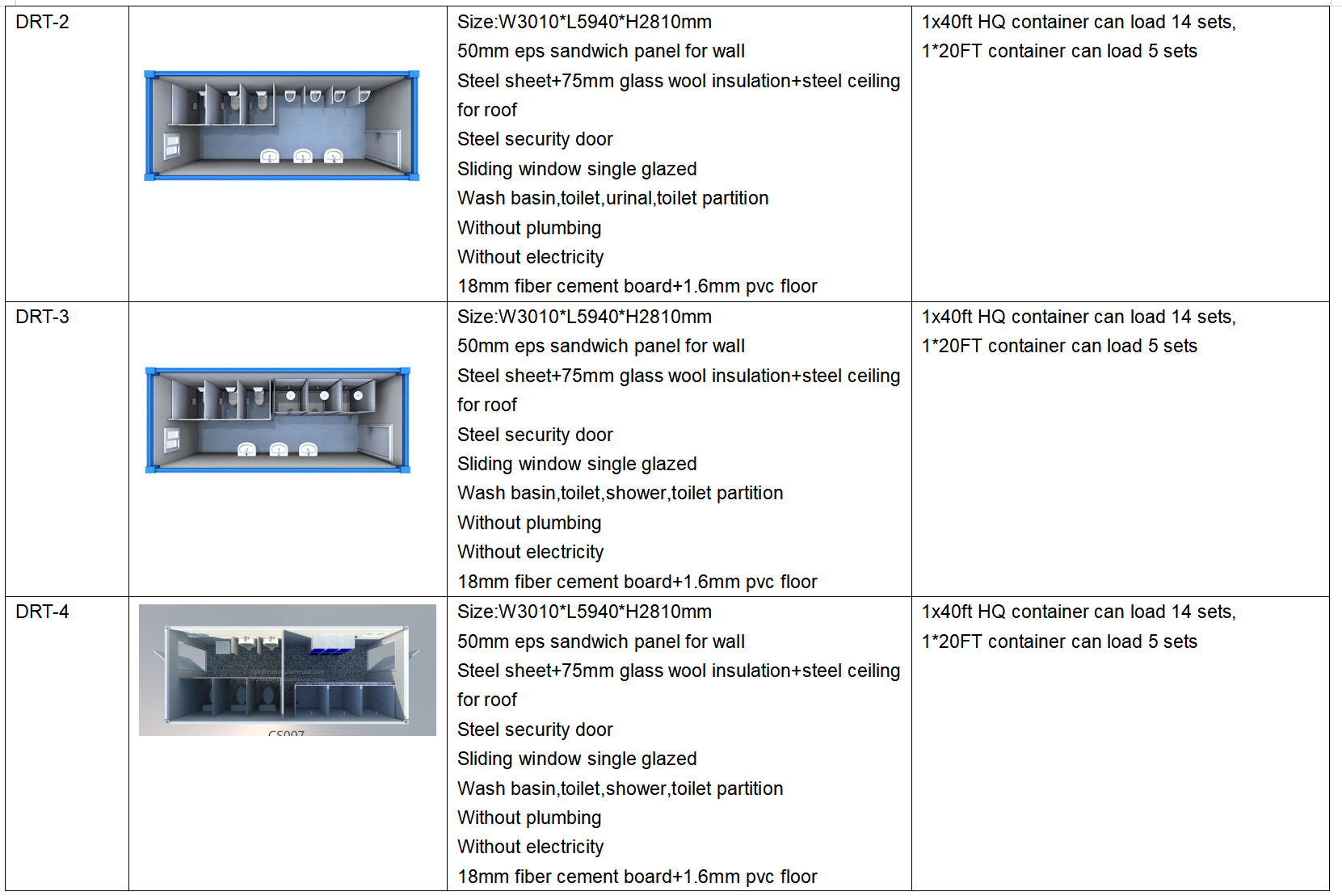
Below are some of our popular container house layouts. Contact us to receive the complete design catalogue.
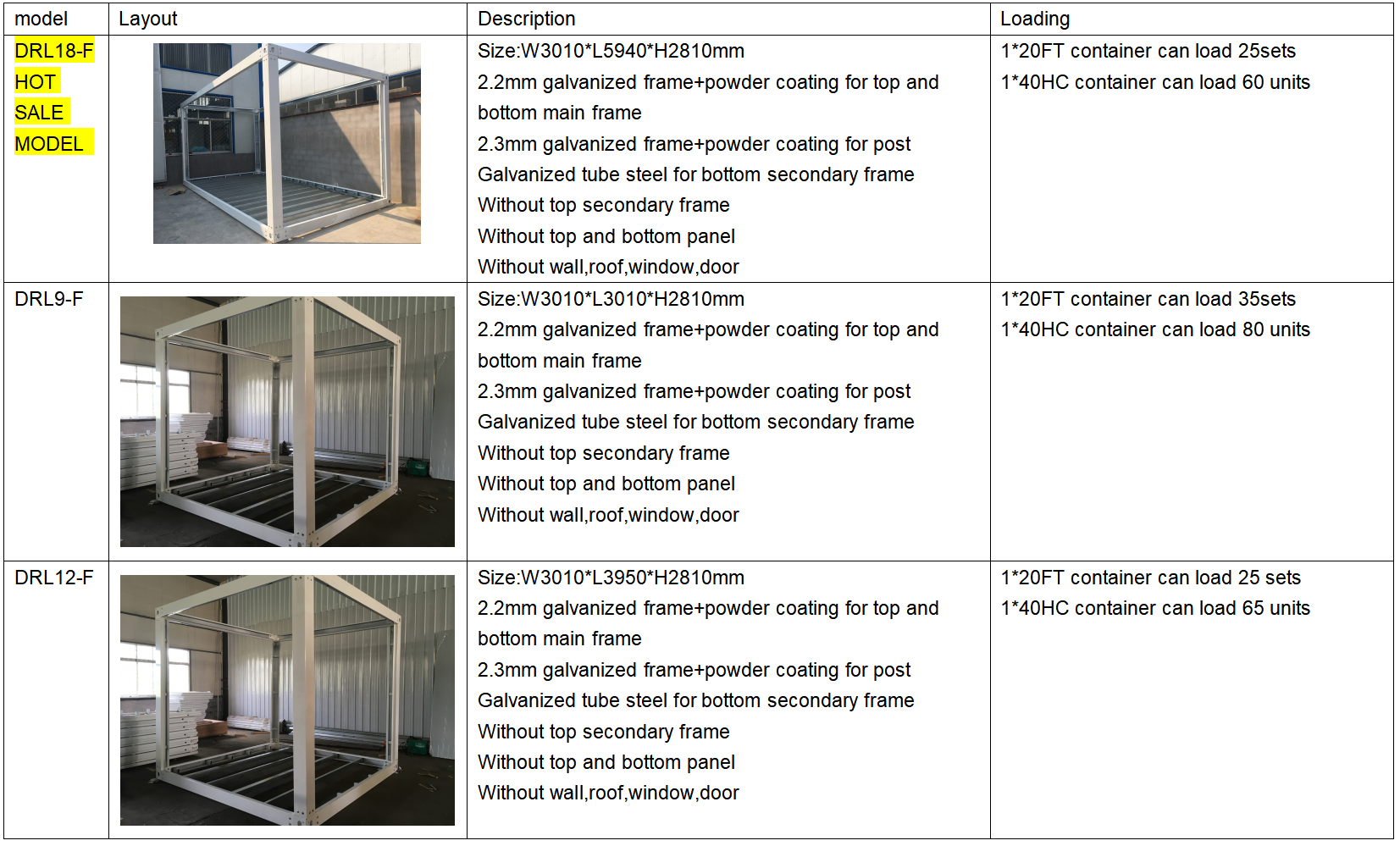
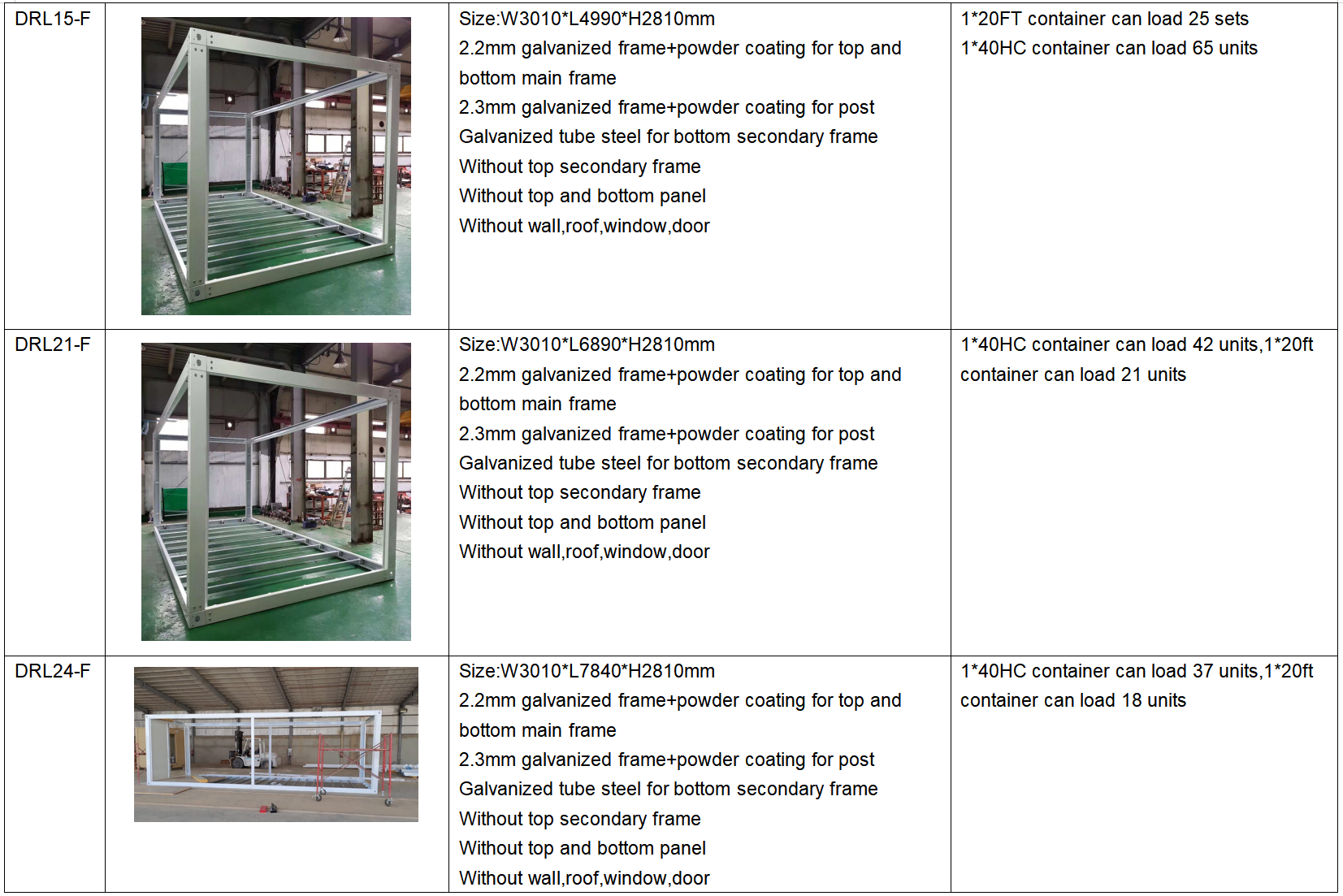
Layout Design Model A
Layout Design Model B
Layout Design Model C
Layout Design Model D
Layout Design Model E
Layout Design Model F
Layout Design Model G

Packing & Logistics Solutions

Full Container Load (FCL)

For full container orders, components are loaded onto custom-welded steel pallets and shrink-wrapped. This protects the finish and simplifies loading and unloading via forklift.
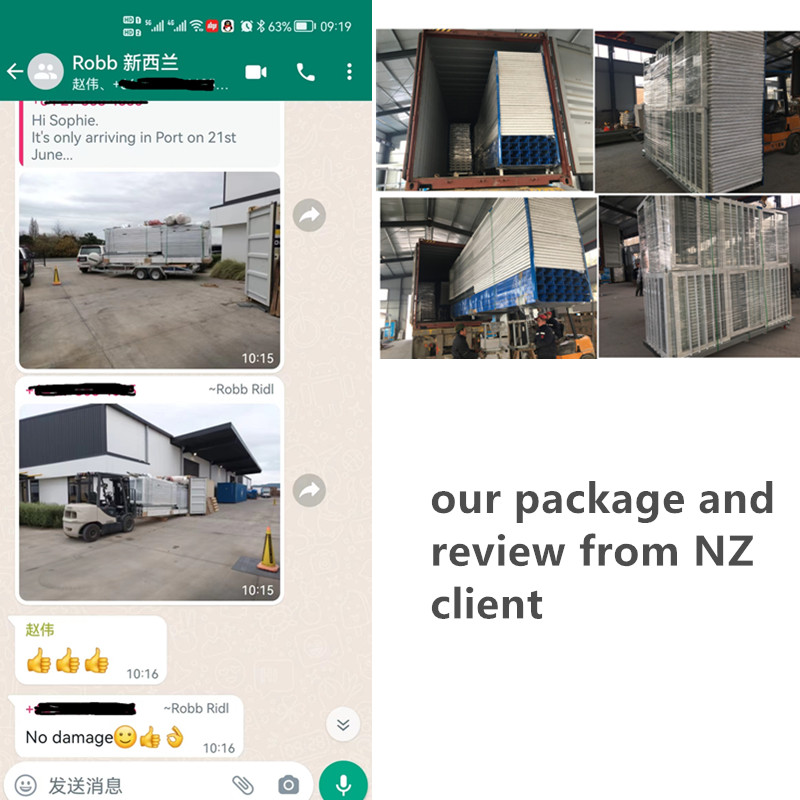
FCL packing using steel pallets and plastic wrap

Less than Container Load (LCL)

For shared container shipments, components are secured within reinforced wooden crates to prevent movement and damage during transit.
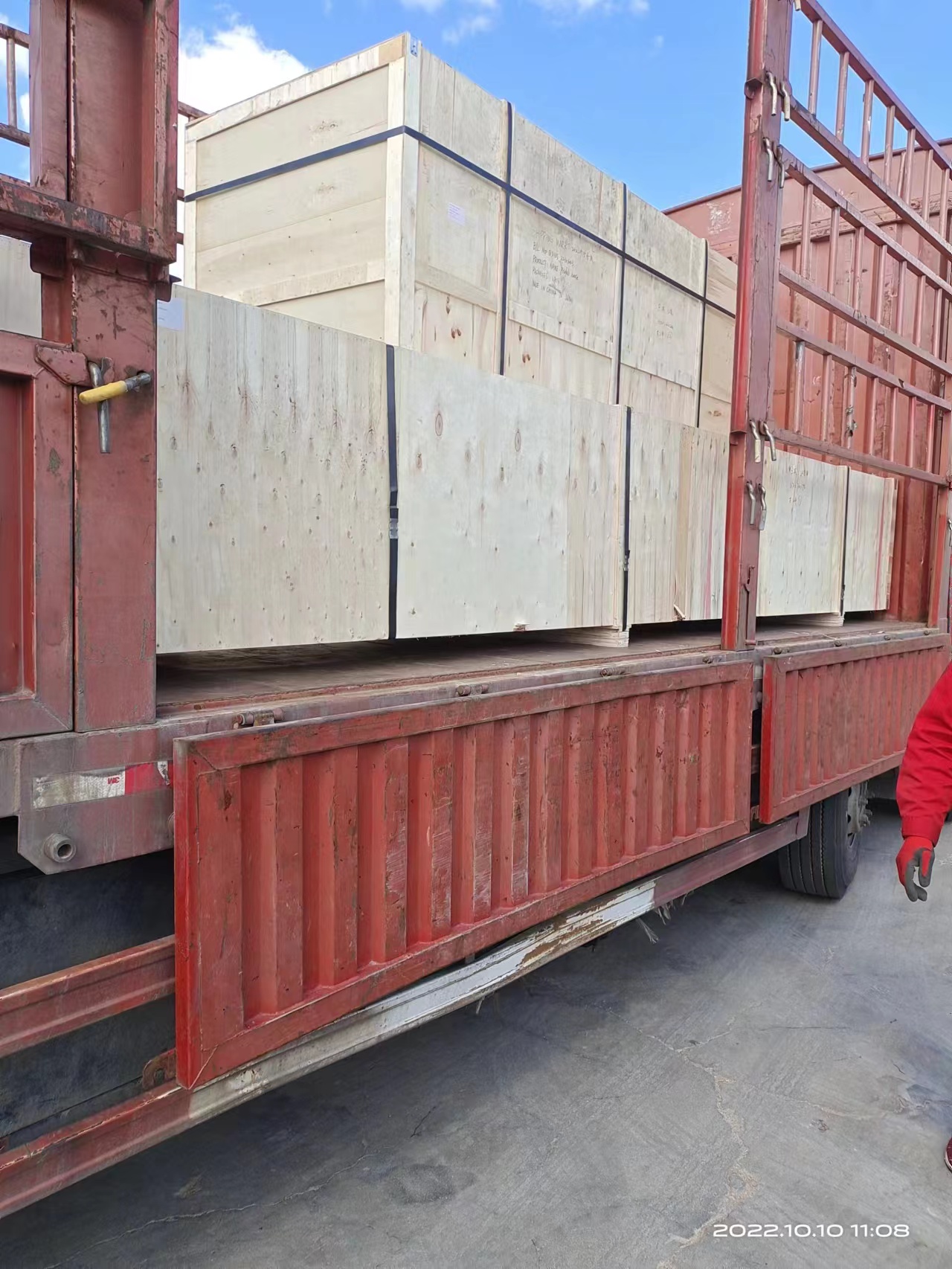
LCL packing in sturdy wooden crates

Standard Loading vs. Our Packaging

Loose piece-by-piece container loading typically requires four workers up to an entire day to unload, increasing labor costs and the potential for component damage.
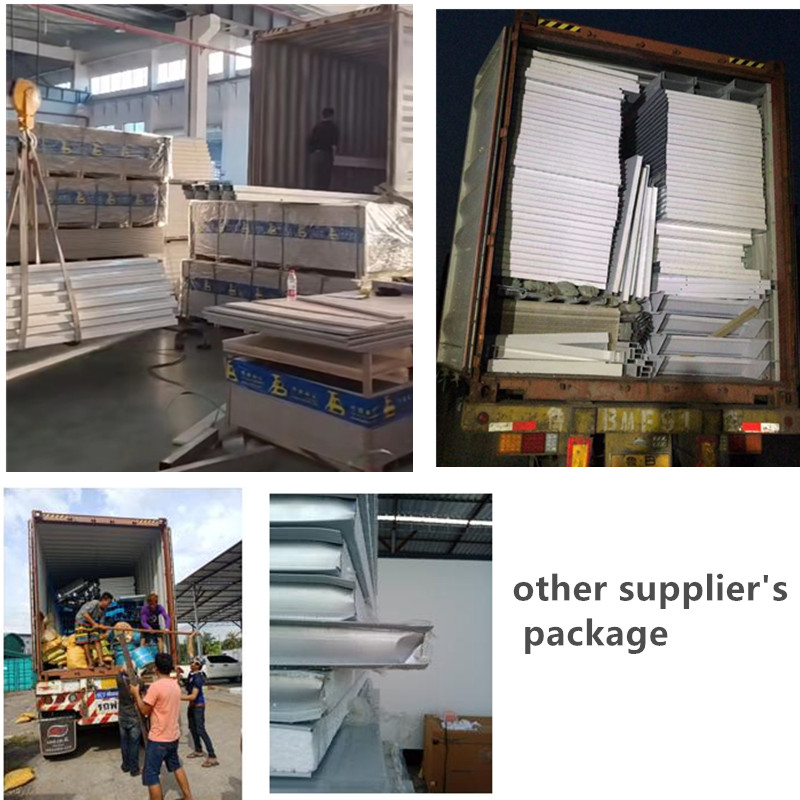
Manual piece-by-piece shipping container loading

Manufacturing Infrastructure

Our manufacturing facility specializes in the development and production of modular container houses. With dedicated design, engineering, and installation teams, we deliver tailored solutions worldwide—covering every stage from initial design concepts to final structural engineering.

Our production facilities support a diverse range of structures, including flat-pack, collapsible, folding, and expandable container houses. We handle all logistics requirements for global export, ensuring compliance with building codes and standards across markets in the Americas, Europe, Oceania, the Middle East, and Southeast Asia.
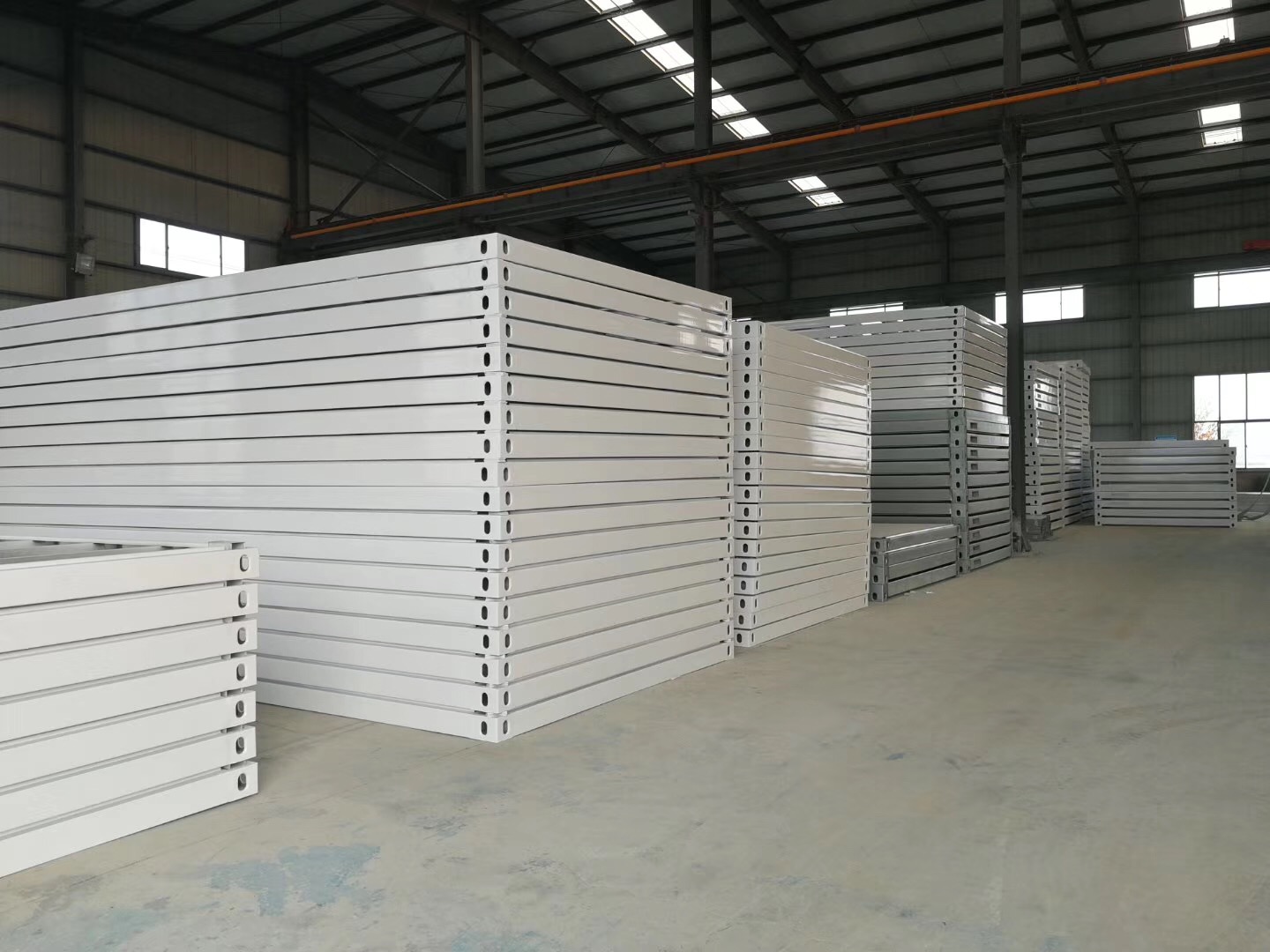
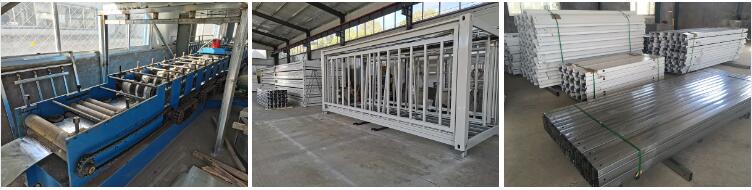
Factory production line view
Assembled modular container unit inside warehouse

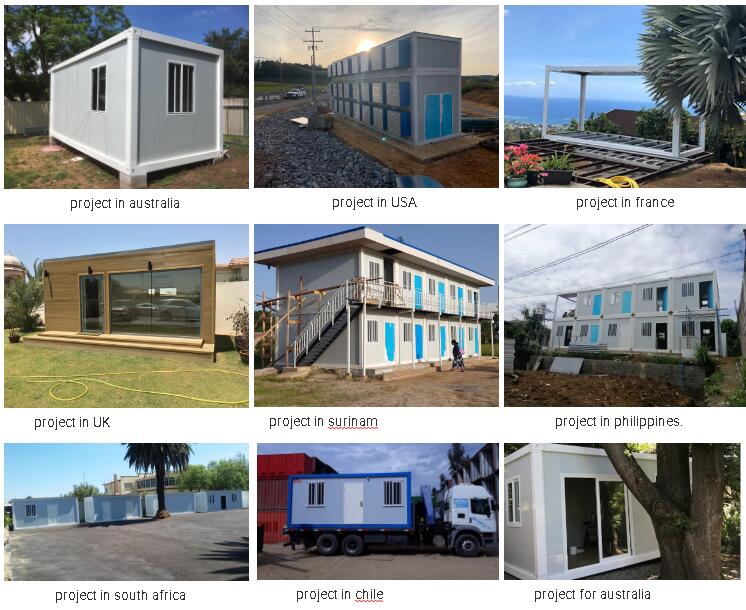
Project Case Study

Completed multi-story container house project site

Completed On-Site Project

Customer inspection at completed container house site

Frequently Asked Questions (FAQ)

Q What is the geographic scope of your logistics and operations?
We operate from our advanced manufacturing hub in Shandong, China. Since starting operations in 2017, we have exported to international markets including Oceania (27.00%), Western Europe (11.00%), Southeast Asia (10.00%), North America (8.00%), South America (8.00%), Central America (8.00%), Africa (8.00%), Southern Europe (6.00%), East Asia (3.00%), the Middle East (3.00%), and Eastern Europe (2.00%).
Q How is the quality of the container houses controlled and guaranteed?
We implement a strict quality management system. A detailed pre-production sample is always constructed and evaluated before commencing full mass production. Additionally, a final comprehensive quality control inspection is performed on all materials prior to shipping.
Q What types of modular container buildings can be purchased?
We offer a wide product portfolio, including Flat-Pack Container Houses, Collapsible Container Houses, Folding Container Houses, Expandable Container Houses, and specialized Pitched Roof Collapsible Container Houses.
Q What architectural design capabilities support your production?
Our facilities span a production footprint of 130,000 square meters. Our technical department comprises senior structural engineers utilizing professional design software including AutoCAD, PKPM, 3D3S, and Tekla Structures (Xsteel) V12.0. This allows us to provide end-to-end design, fabrication, and installation support.
Q What are the accepted payment methods and delivery terms?
We support FOB, CFR, CIF, and EXW delivery terms. We accept payments in major global currencies including USD, EUR, JPY, CAD, AUD, HKD, GBP, CNY, and CHF. Accepted payment methods include T/T, L/C, D/P, D/A, MoneyGram, Credit Card, PayPal, Western Union, and Escrow.
Q How are components packaged to prevent damage during shipment?
For Full Container Load (FCL) orders, components are secured onto steel pallets and shrink-wrapped, which reduces site labor and protects materials during transit. For Less than Container Load (LCL) shipments, we construct robust custom wooden crates to prevent damage from movement inside shared containers.

Related Products